Which filament should you choose: PLA, PETG, ASA, ABS or TPU?
PLA for indoors, PETG when it has to be tougher, ASA for outdoors and TPU for flexible parts: how to choose the filament for your object.
Popular picks from this guide
Popular products at today's lowest price. Compare every shop on the product page.
Short answer: Start with PLA: it is the easiest to print and suits most objects for indoor use. Choose PETG when a print has to be tougher or cope with a bit more heat and moisture, ASA (or ABS) for parts used outdoors or in the sun, and TPU when something has to flex. Always check which diameter your printer uses first, usually 1.75 mm.
Filament is the strand your FDM printer prints with. The spool lists a material, a diameter and a weight. Here is what those mean and which material suits which object, with examples from our filament. Nozzla does not test filament itself: temperatures and properties come from Prusa's material guides and from the manufacturers on the spool.
Diameter first: 1.75 or 2.85 mm
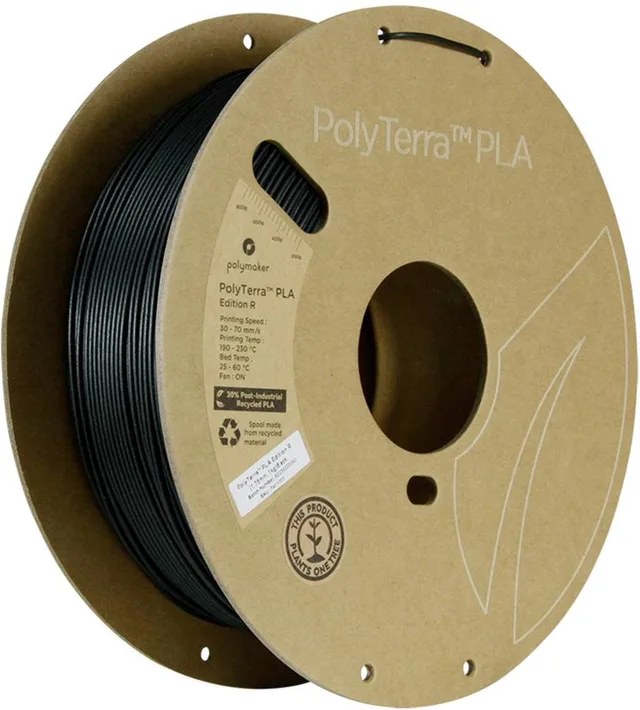
Almost all home printers use 1.75 mm filament, like Creality Hyper PLA and Polymaker Polyterra PLA. Some printers, such as many UltiMaker models, use 2.85 mm. That strand does not fit a 1.75 mm printer, and the other way around. The diameter is on the spool and in your printer's manual.
A spool usually weighs 1 kg. There are also 500 gram spools, handy for a colour you rarely use, and large spools of 3 kg or more for people who print a lot. How many metres of filament are on a spool? shows roughly how many metres a spool holds.
PLA: where to start
PLA melts at a low temperature and hardly warps. Prusa lists 210 to 215 °C for the nozzle and 60 °C for the bed. It gives clean prints and comes in many colours and finishes: matte, silk like Polymaker Panchroma Silk, or with wood or stone mixed in.
The drawback: PLA does not handle heat well. According to Prusa it softens and deforms above about 60 °C. A print on a car dashboard in the sun or next to a radiator can bend. For figures, decoration, prototypes, holders and toys indoors, PLA is the obvious choice.

PLA to start with
- Creality
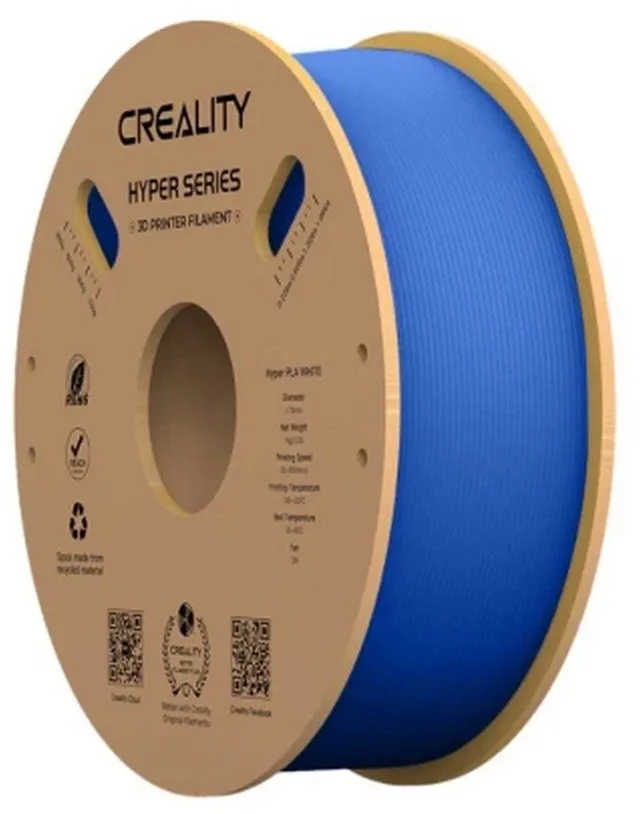
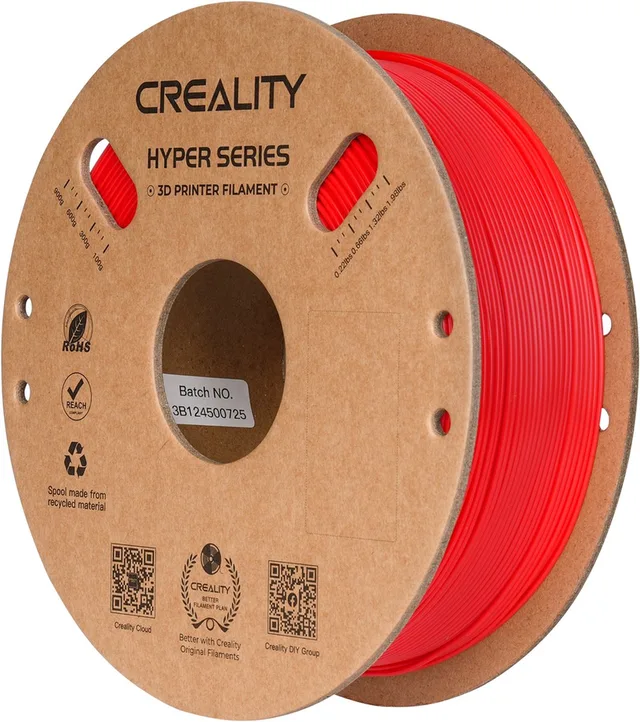
Hyper PLA filament, 1.75 mm
PLA1.75 mm1 kgFrom €18.48 · at 5 shops
- Creality
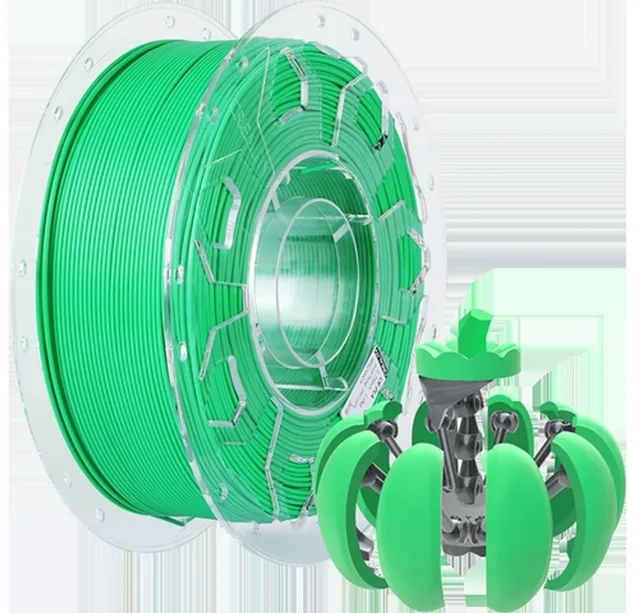
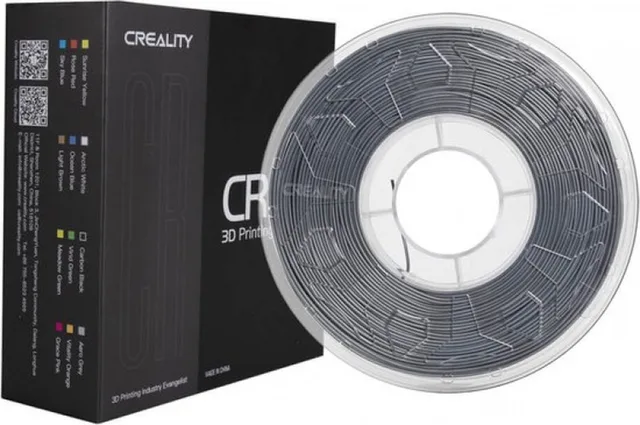
CR-PLA filament
1.75 mm 1 kgPLA1.75 mm1 kgFrom €21.99 · at 4 shops
Lowest in 29 days
- Polymaker
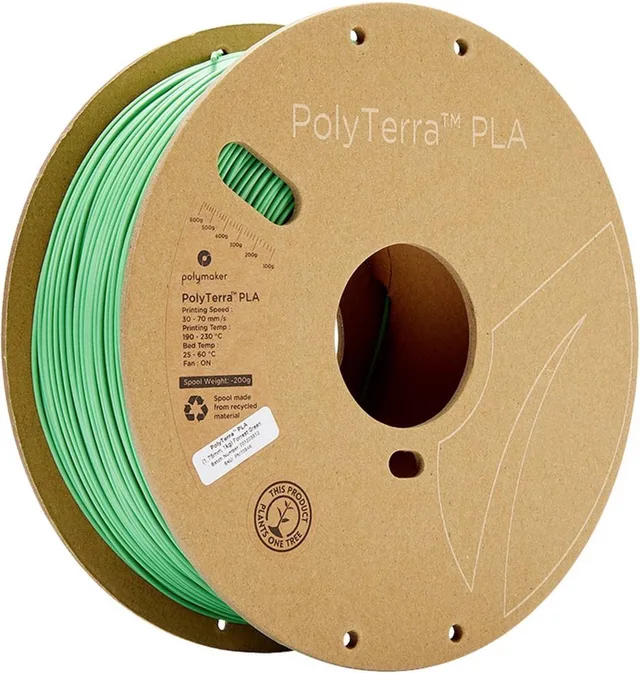
Polyterra PLA filament
Forest GreenPLA1.75 mm1 kgFrom €19.98 · at 2 shops
Lowest in 28 days
- Polymaker
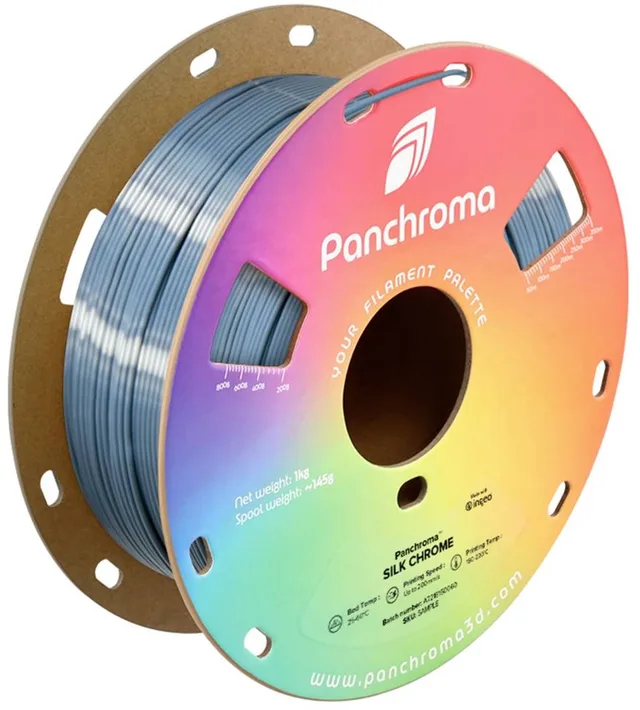
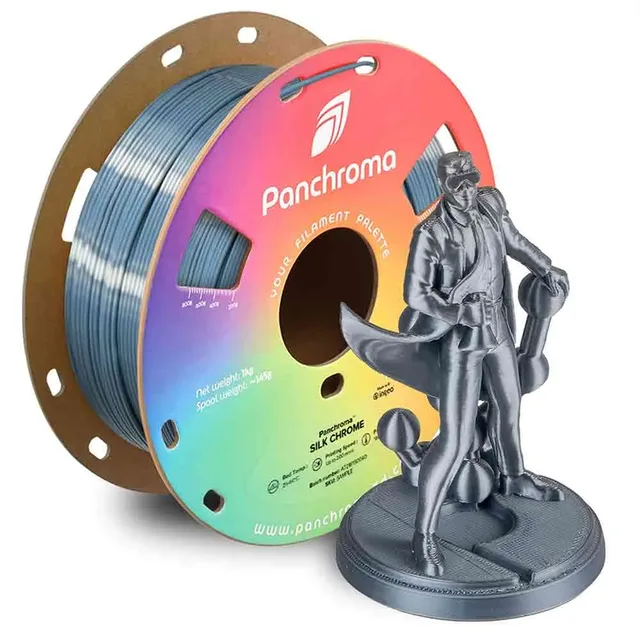
CA03005 Panchroma Silk filament, PLA plastic, silk gloss, 1.75 mm, 1000 g, Chrome, 1 piece
PLA1.75 mm1 kgFrom €27.98 · at 3 shops
Lowest in 29 days
PETG: tougher and more resistant to moisture
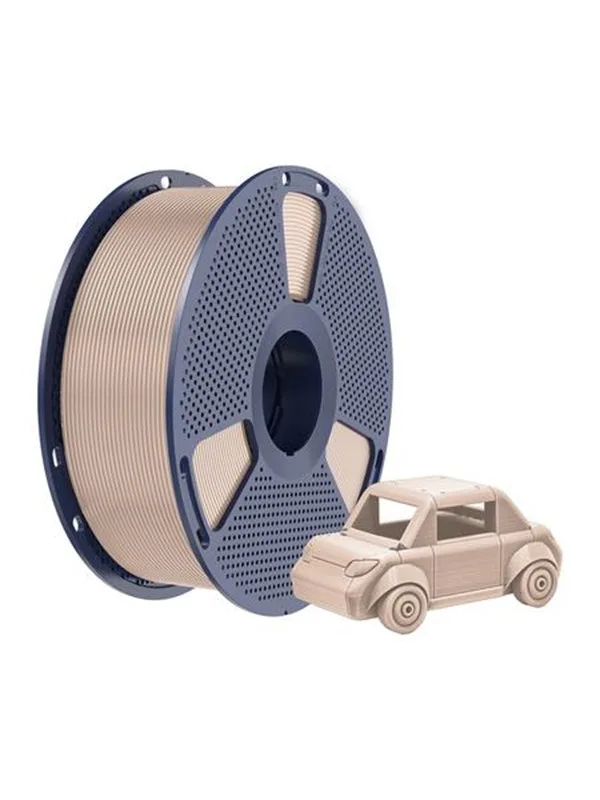
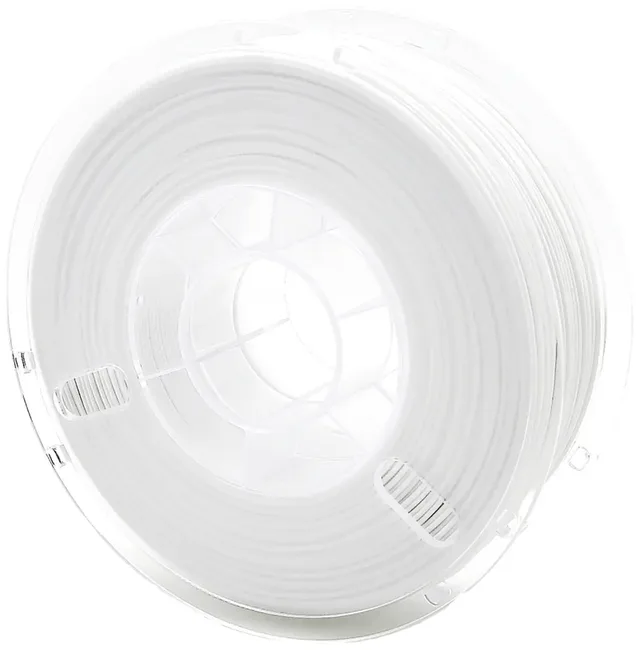
PETG is the next step. Prusa calls it tough and slightly flexible, with little warping and good layer adhesion. It resists water and humidity and, according to Prusa, temperatures up to about 80 °C. That makes it a good fit for parts under load, boxes, brackets and things for the kitchen or garden.
PETG prints hotter than PLA: Prusa lists 230 to 240 °C for the nozzle and 85 to 90 °C for the bed. It strings more easily, leaving thin threads between parts of your print, which your slicer settings help with. Examples are Sunlu PETG, Anycubic PETG and Raise3D Premium PETG.
ASA and ABS: for outdoors and heat
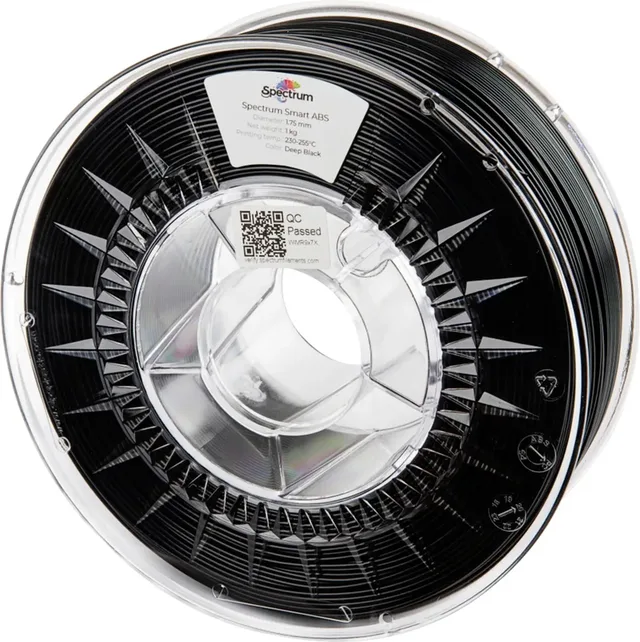
ASA and ABS cope with more heat than PLA and PETG. Prusa calls ASA suitable for outdoor use because it resists UV light and heat, up to about 93 °C. Prusa sees ASA as the successor to ABS: it is more UV resistant, warps less and smells less.
Both materials do warp as they cool. For ASA Prusa advises an enclosure to keep the heat around the print, a nozzle of about 260 °C and a bed of 105 to 110 °C. They give off fumes while printing, so put the printer in a ventilated room. With an open printer PETG is often the easier choice. Examples are Sunlu ASA, Anycubic ASA, Spectrum smart ABS and Elegoo ABS.
PETG, ASA and ABS
- Sunlu
PETG Filament
PETGFrom €13.98 · at 2 shops
Lowest in 24 days
- Raise3D
PMRA-1007-004 Premium PETG Filament PETG hitzebeständig
1.75 mm 1000 g Weiß Premium 1 St.PETG1.75 mm1 kg€54.94 · at 1 shop
- Spectrum Filaments
80088 smart ABS filament, ABS impact resistant, 1.75 mm, 1000 g, Deep Black, black, 1 pc
ABS and ASA1.75 mm1 kgFrom €31.94 · at 1 shop
TPU: flexible
TPU is rubbery and bends. You use it for cases, feet, gaskets and tyres. The hardness is on the spool in Shore, for example 95A. Prusa lists 60A to 90A as typical for flexible filament and says the softer it is, the harder it is to print.
Flexible filament prints slowly. Prusa mentions a speed of about 20 mm per second, a nozzle of 230 to 245 °C and a bed of 60 to 75 °C. The strand has to be fed gently, so it is easiest on a printer with direct drive. An example is Anycubic TPU.
Filled filaments
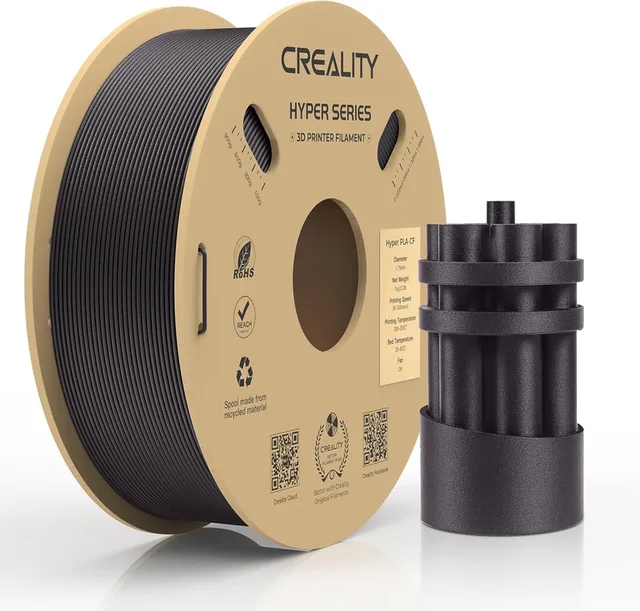
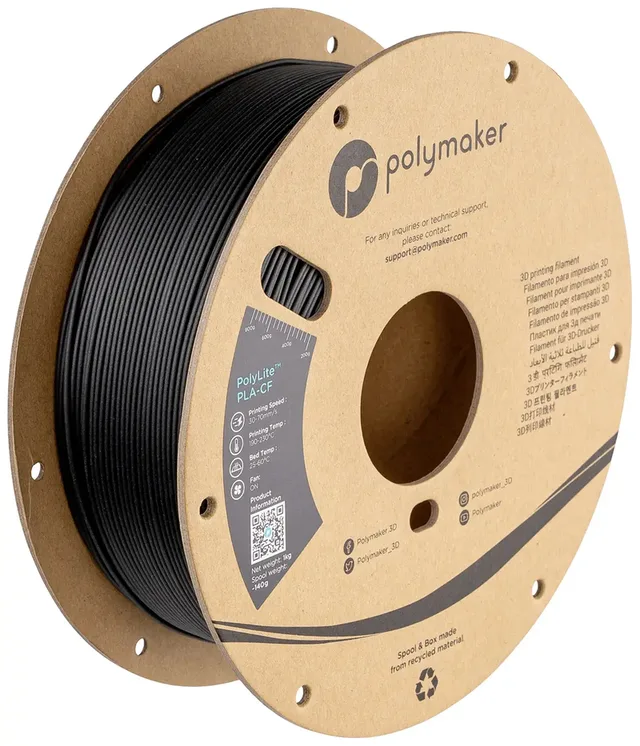
There is also filament with short fibres mixed in, like PLA with carbon fibre. It looks matte and is stiffer, like Creality Hyper PLA-CF and Polymaker PolyLite PLA-CF. Those fibres are abrasive. They wear a brass nozzle quickly, so print them with a hardened steel nozzle.
TPU and filled filament
- Creality
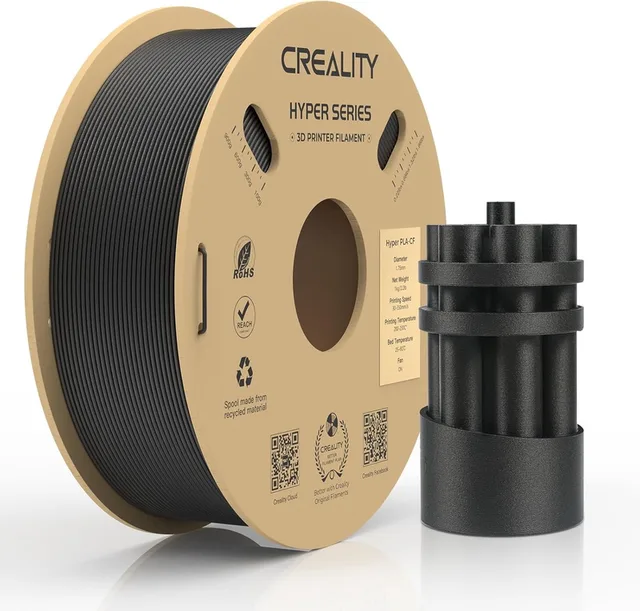
Hyper PLA-CF Filament
PLA van koolstofvezel met hoge snelheidPLA, Carbon and glass fibre1.75 mm1 kgFrom €31.37 · at 1 shop
Lowest in 29 days
- Polymaker
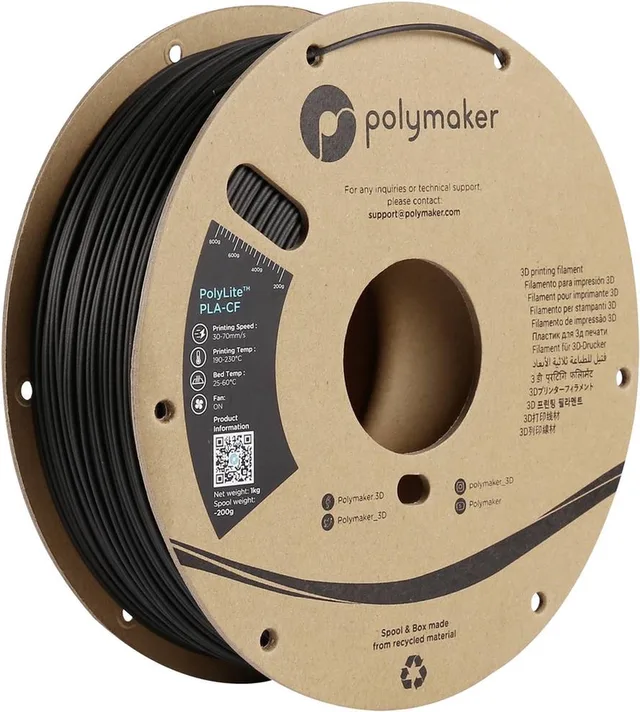
PA10001 Filament PLA-CF Koolstofvezelversterkt
1.75 mm 1000 g Zwart PolyLite™ 1 stuk(s)PLA, Carbon and glass fibre1.75 mm1 kgFrom €52.94 · at 2 shops
Keep it dry
Filament absorbs moisture from the air. Prusa writes that most materials do, and that nylon and flexible filament need drying more often than PLA. According to Prusa, damp filament gives a rougher surface, bubbles and weaker layer adhesion. Store open spools in a sealed box with desiccant, or use a dryer like the Polymaker PolyDryer or the Kingroon dry box.
Frequently asked questions
Which filament is easiest for beginners?
PLA. It melts at a low temperature, hardly warps and needs no enclosure. Most printers come set up for PLA.
Can I use PLA outdoors?
Better not for something that stands in the sun. According to Prusa, PLA softens above about 60 °C. For outdoors ASA or PETG are better suited.
What is the difference between ASA and ABS?
They are similar. Prusa calls ASA more UV resistant, with less warping and less smell. Both prefer an enclosure and a ventilated room.
Does any filament fit my printer?
Only if the diameter matches, usually 1.75 mm. Also check which temperatures your printer reaches: ASA needs a hotter nozzle and bed than PLA. Can my printer handle this filament? shows per filament whether it will work, with temperatures to start from.
Keep looking
Nozzla doesn’t test machines itself. This guide sets out what manufacturers state.
More buying guides
- Which 3D printer should you choose? FDM or resin, large or compact, open or enclosed, one colour or several: how to choose a 3D printer that fits what you want to make. Read the guide
- Choosing a resin printer and which resin you need For miniatures and fine detail: how to choose a resin printer and the resin that goes with it, and how to work with it safely. Read the guide
- Laser cutter or engraver: how many watts do you need? Diode, CO2 or fiber, and what the number in watts really says: how to choose a laser cutter or engraver, and how to work with it safely. Read the guide