Which nozzle do you need: size, brass or hardened steel?
The nozzle decides how fine you print and which filament you can use: how to choose the size and material that suit your printer.
Popular picks from this guide
- Go to TechInn
-
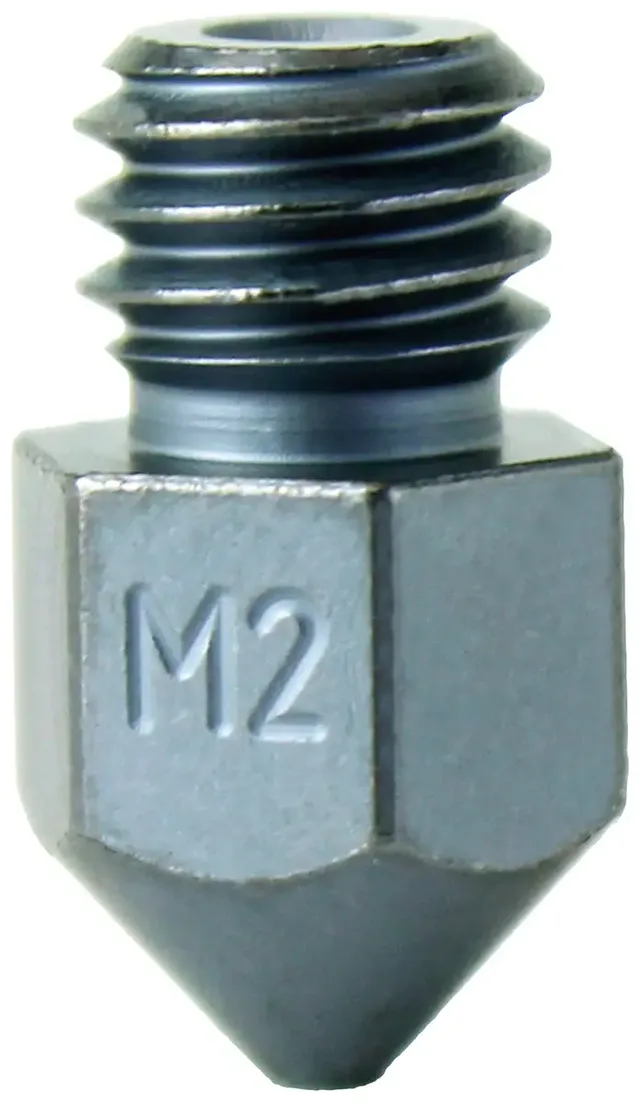
Micro Swiss nozzle MK8 High Speed Steel 0.4 mm, suitable for 3D printers MakerBot Replicator 1, Makerbot Replicator Mini, bq Witbox, MakerbotGo to TechInn
From €26.98 · at 3 shops
Lowest in 24 days
-
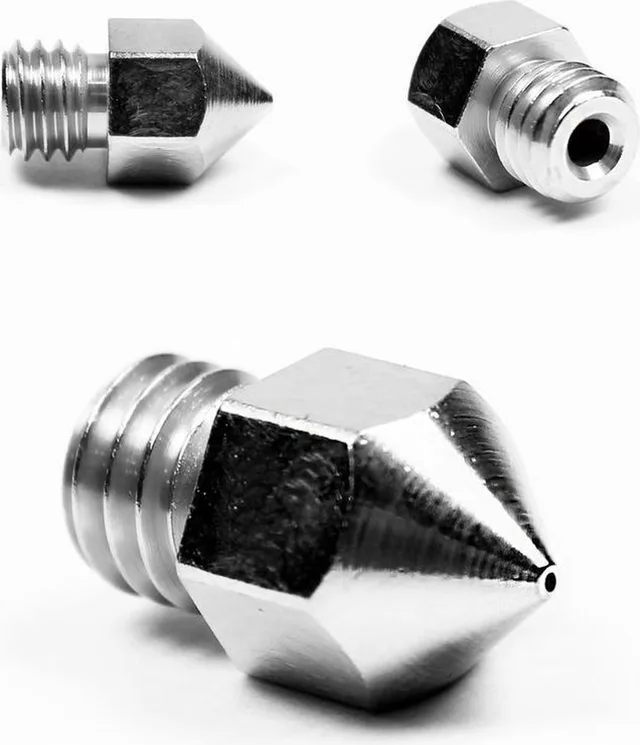
Micro Swiss Nozzle MK8 MakerBot 0,6 mm, plated wear resistant nozzle M2549-06Go to TechInn
From €20.98 · at 3 shops
Lowest in 29 days
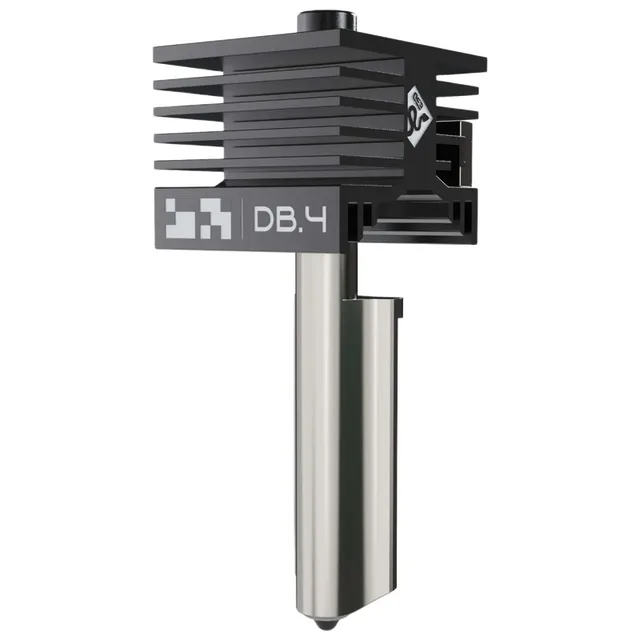
Popular products at today's lowest price. Compare every shop on the product page.
Short answer: First choose a nozzle that fits your printer or hotend, because every system has its own size and thread. A 0.4 mm nozzle is the standard, 0.2 or 0.25 mm gives finer detail but prints more slowly, and 0.6 or 0.8 mm prints faster and sturdier with less detail. Brass is fine for regular filament; filament with carbon or glass fibre needs hardened steel or another wear-resistant nozzle.
The nozzle is the small tip the molten filament comes out of. It decides how fine you print, how fast it goes and which filament you can use. Here is how to choose one, with examples from our parts and upgrades. Nozzla does not test nozzles itself: the details come from the manufacturers, the product names and Prusa's explanation of nozzles.
First: does it fit your printer?
No nozzle fits every printer. Each brand, and sometimes each series, has its own system.
- Separate threaded nozzles, like Creality's nozzle kit and the E3D Nextruder nozzle for Prusa. You unscrew the old one and screw in the new one.
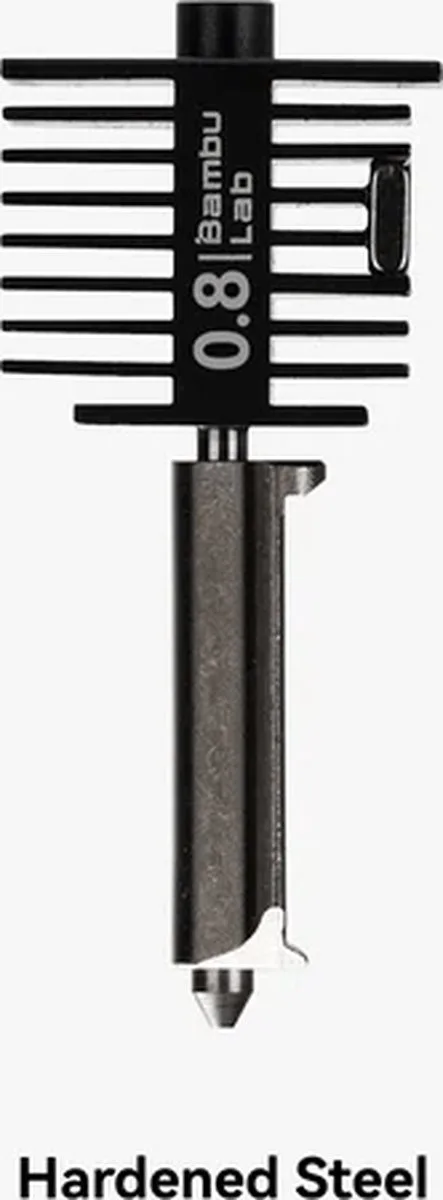
- Complete hotends, where you swap the nozzle together with the heater block. Bambu Lab works this way, with its own hotend per series, like the 0.4 mm hardened steel hotend for the A1 series. The hotends for the Snapmaker U1 and Flashforge's quick swap nozzles are made per printer too.
Check the product name for which printer or hotend a nozzle is meant for, and your printer's manual for which type it uses. Some nozzles are also made for a different filament size, like 2.85 mm instead of 1.75 mm.
The diameter: 0.2 to 0.8 mm
The diameter is the size of the hole. Almost every printer ships with 0.4 mm.
- 0.2 and 0.25 mm: thinner lines for small figures, fine text and small parts. Printing takes much longer. An example is the Micro Swiss 0.2 mm.
- 0.4 mm: the standard, a good balance between detail and speed.
- 0.6 mm: thicker lines, so faster printing and sturdier walls, with a little less detail. Handy for practical parts and for filled filament, like the E3D Diamondback 0.6 mm for the P1 series.
- 0.8 mm: faster still, for large objects where fine detail does not matter, like the Bambu Lab 0.8 mm hotend for the A1 series.
When you change nozzles, set the new diameter in your slicer. Programs like Bambu Studio and PrusaSlicer have separate profiles per nozzle size. With a larger nozzle you also choose a larger layer height.
Nozzles and hotends by size
- Micro Swiss
Düse Hotend
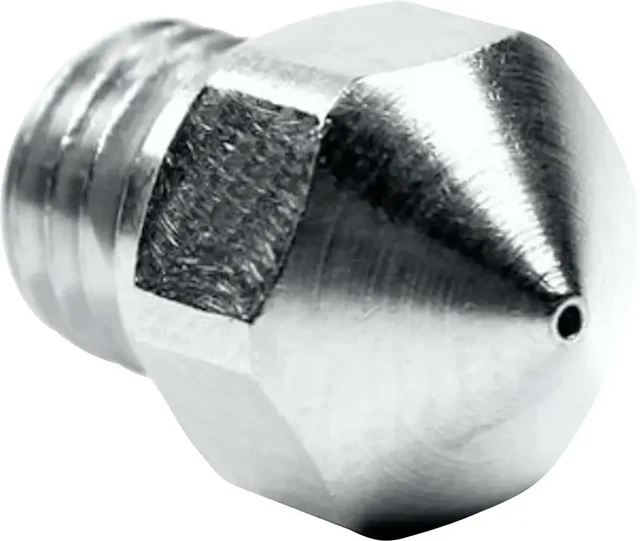
0.2 mm Plated Wear M2548-02From €20.98 · at 2 shops
- Micro Swiss
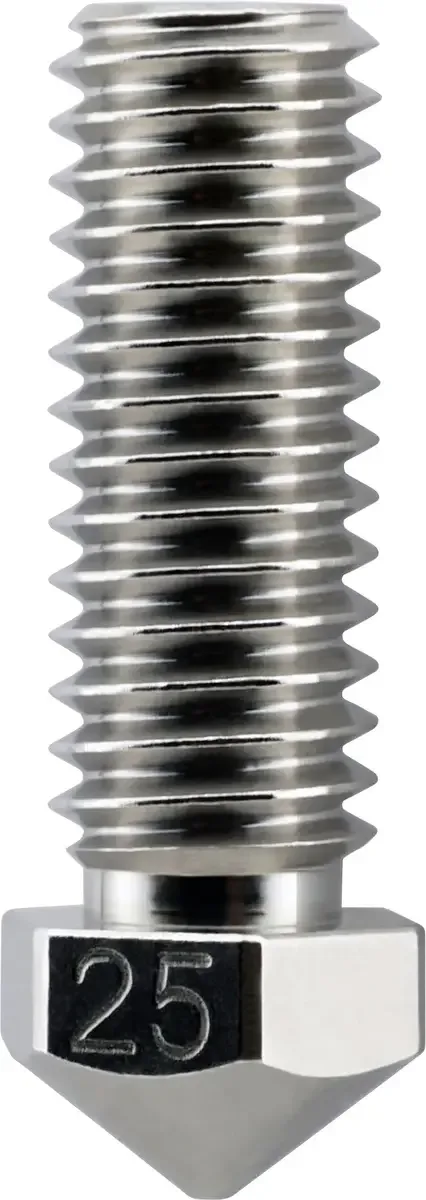
3D Drucker Düse
€15.98 · at 1 shop
Lowest in 24 days
- E3D
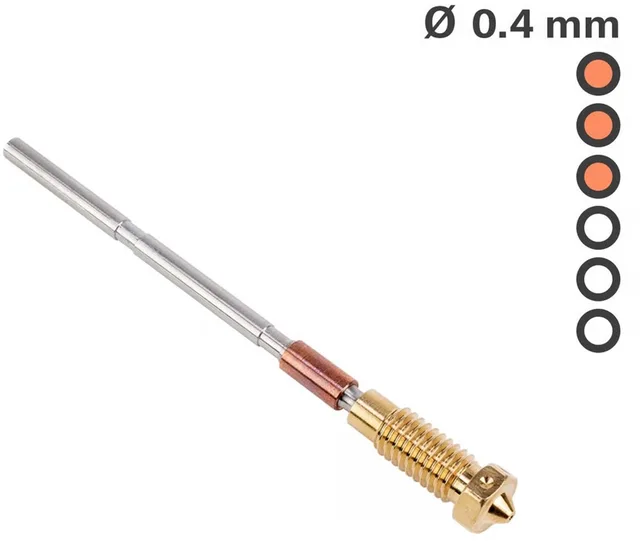
Prusa E3D Messing Nozzle
From €37.48 · at 2 shops
Lowest in 15 days
- E3D
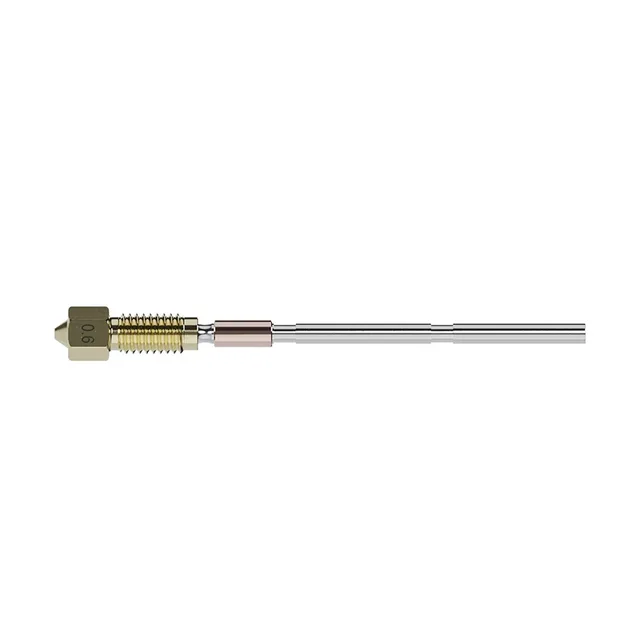
Messing Prusa Nextruder Nozzle
Met Hoge Doorstroming 0.6 Mm€39.48 · at 1 shop
Lowest in 24 days
- E3D
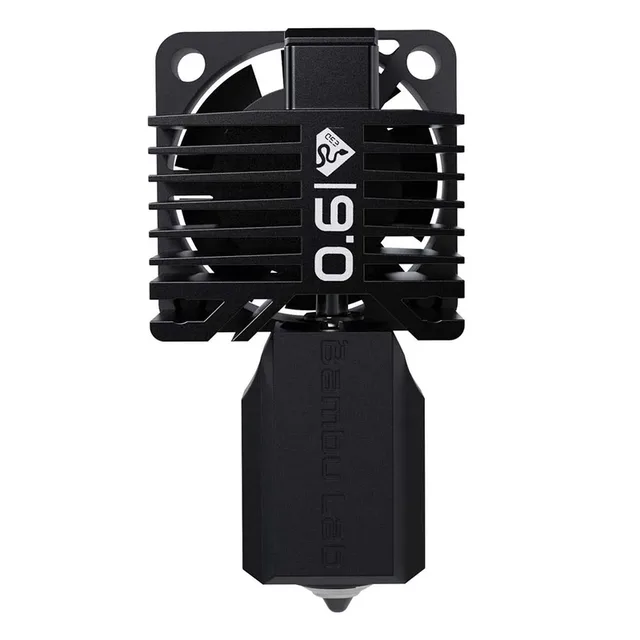
Diamondback Hotend Voor Bambu Lab P1-serie
0.6 Mm€169.98 · at 1 shop
Lowest in 24 days
- Bambu Lab
Bambu Lab
A1 Series€22.75 · at 1 shop
The material: brass, hardened steel or diamond
Prusa writes that brass conducts heat very well and is tough enough for most common filaments. For PLA, PETG, ABS, ASA and TPU a brass nozzle is fine.
Filament with carbon fibre or glass fibre is abrasive. According to Prusa it wears a brass nozzle too quickly, which is why wear-resistant nozzles exist. A common kind is hardened steel, like the Elegoo hardened steel nozzle set and the Bambu Lab hotend for the P1 series. Other makers use a coating or a hard tip. Micro Swiss calls some of its nozzles coated and wear resistant, and E3D's Diamondback hotends have a polycrystalline diamond tip from the maker DiamondBack, like the Diamondback for the X1 Carbon.
If you print filled filament now and then and regular PLA the rest of the time, you can simply leave a wear-resistant nozzle in the printer. You notice a worn nozzle by thinner or uneven lines and prints that are no longer as clean.
Regular or high flow
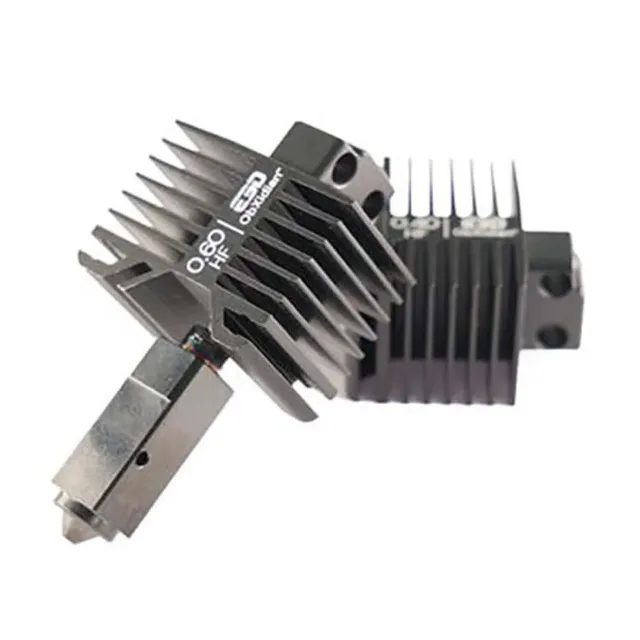
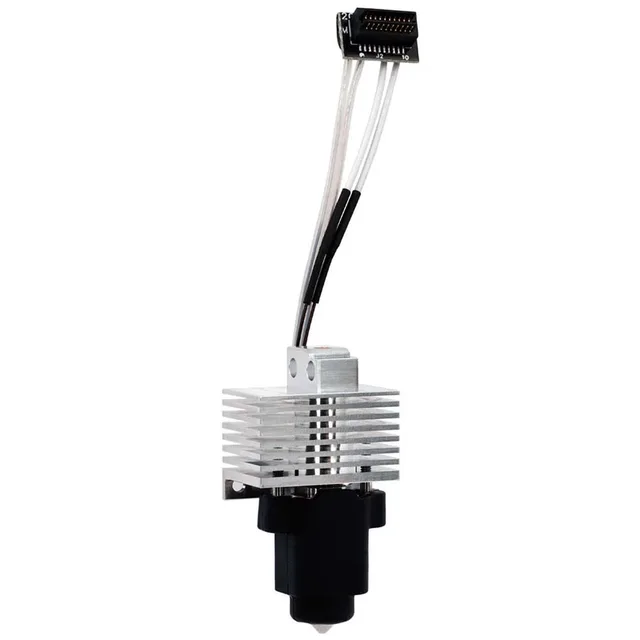
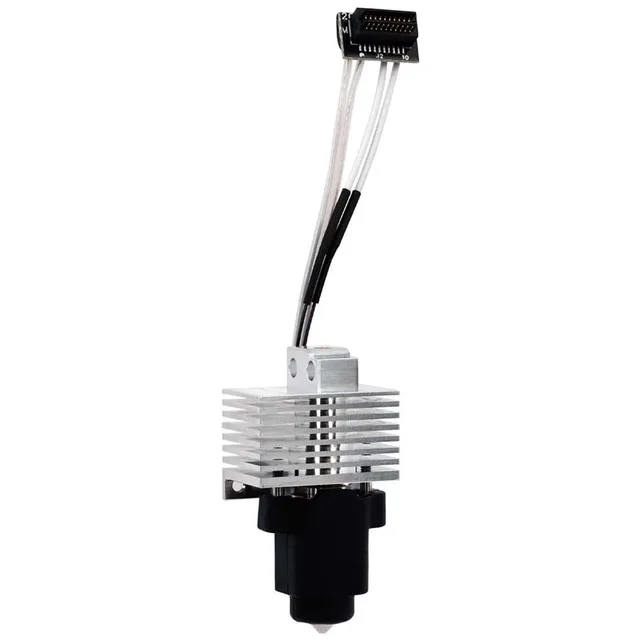
A high flow nozzle or hotend can melt more filament per second. That helps on fast printers, which otherwise have to wait for the filament to heat up. Makers put it in the name, like the E3D Obxidian High Flow for the Bambu Lab X1 and P1 and the Micro Swiss FlowTech with CHT for the P1S. CHT is a Bondtech design that splits the filament into three streams inside the nozzle, so it heats up faster.
If you do not print at top speeds, you do not need high flow. A regular nozzle from the manufacturer works just as well then.
Wear resistant and high flow
- Elegoo
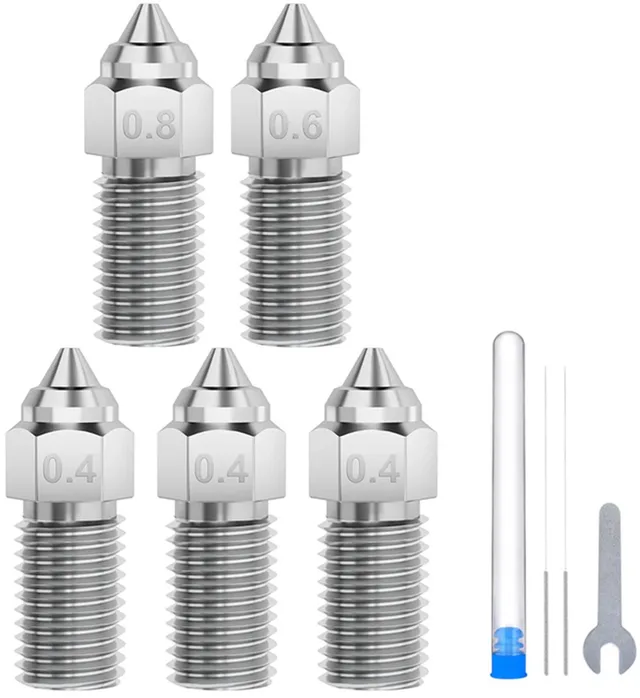
Neptune 4 / 4 Pro Hardened Steel Nozzle Set
(0.4 mm x3, 0.6 mm x1, 0.8 mm x1)From €19.99 · at 2 shops
Lowest in 24 days
- Bambu Lab
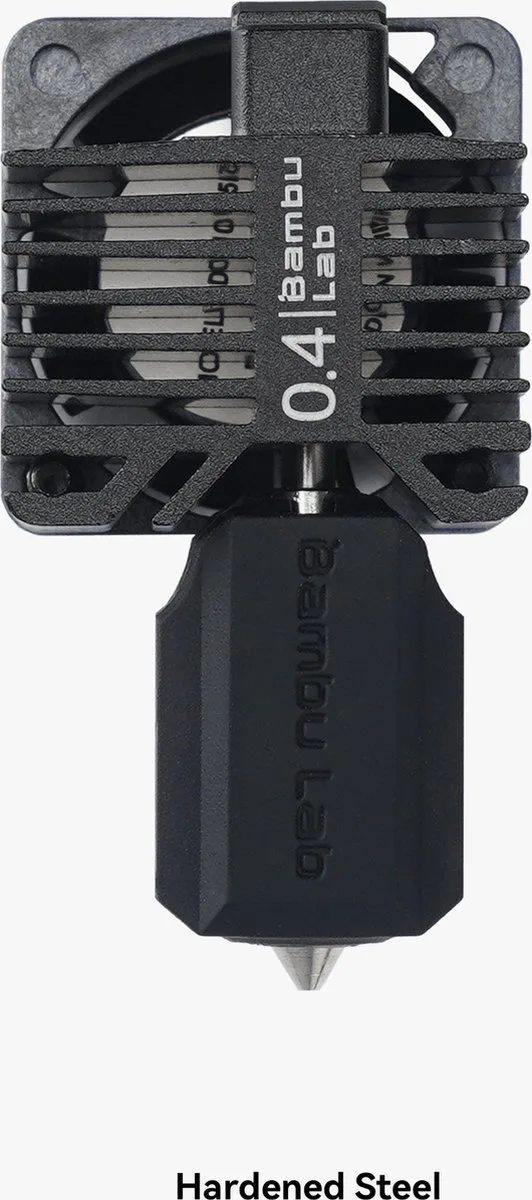
Bambu Lab
P1 Series€52.99 · at 1 shop
- E3D
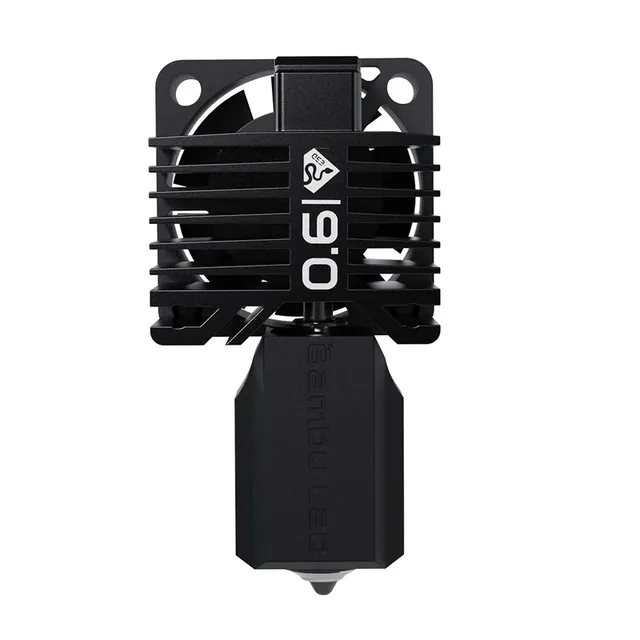
Diamondback Hotend Voor Bambu Lab X1-carbon
0.6 Mm€169.98 · at 1 shop
Lowest in 24 days
- E3D
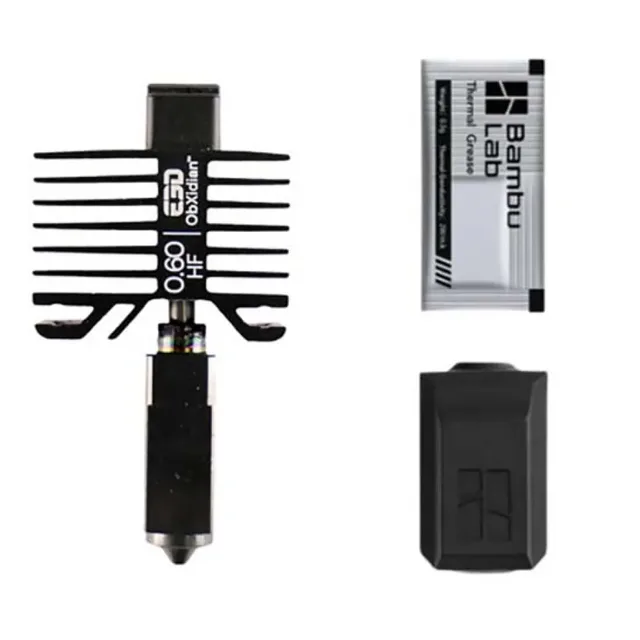
Obxidian™ Hotend
€84.98 · at 1 shop
Lowest in 24 days
- Micro Swiss
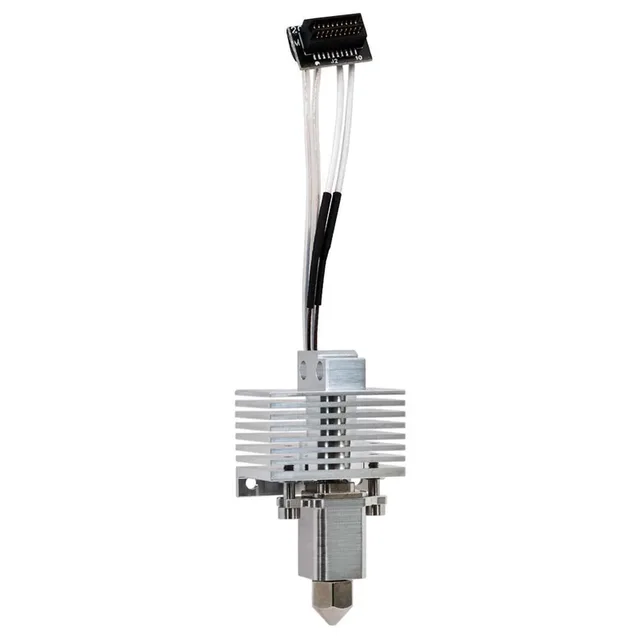
Flowtech™-hotend Voor Bambu Lab P1p/p1s Cm2™ Cht Geharde Punt Hoge Flow
From €97.98 · at 2 shops
- Micro Swiss
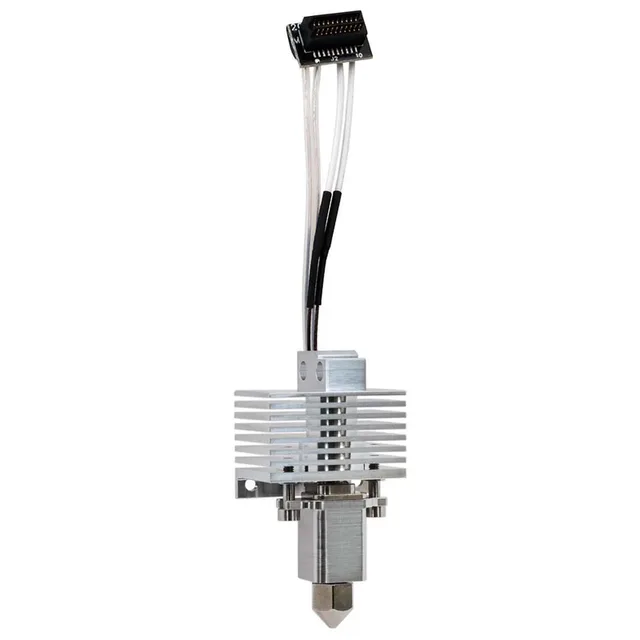
Messing Flowtech™ Hotend Voor Bambu Lab P1p/p1s Plated Cht Hoge Flow
From €81.98 · at 2 shops
Lowest in 24 days
Changing nozzles and keeping spares
A nozzle wears out over time. It is handy to keep one or two spares, also to switch between sizes. A set with several sizes, like the Elegoo set with 0.4, 0.6 and 0.8 mm, makes that easy. Follow your printer's manual when you change it: with many systems the nozzle has to be hot to loosen it, and with a complete hotend you take care with the cables.
Read more about which filament suits which nozzle in our guide choosing filament.
Frequently asked questions
Which nozzle size should I choose?
For almost everything 0.4 mm is a good choice. For fine detail choose 0.2 or 0.25 mm. To print faster and sturdier, choose 0.6 or 0.8 mm.
Do I need a hardened steel nozzle?
Only for abrasive filament, like filament with carbon fibre or glass fibre. For PLA, PETG, ABS, ASA and TPU brass is enough. Can my printer handle this filament? shows whether your nozzle and printer can handle a filament.
Does any nozzle fit my printer?
No. Every system has its own size and thread, and Bambu Lab uses complete hotends per series. Check the product name for which printer a nozzle is made for.
How do I know my nozzle is worn?
You see thinner or uneven lines and prints get less clean, especially after a lot of abrasive filament. A new nozzle fixes that.
Keep looking
Nozzla doesn’t test machines itself. This guide sets out what manufacturers state.
More buying guides
- Which 3D printer should you choose? FDM or resin, large or compact, open or enclosed, one colour or several: how to choose a 3D printer that fits what you want to make. Read the guide
- Choosing a resin printer and which resin you need For miniatures and fine detail: how to choose a resin printer and the resin that goes with it, and how to work with it safely. Read the guide
- Laser cutter or engraver: how many watts do you need? Diode, CO2 or fiber, and what the number in watts really says: how to choose a laser cutter or engraver, and how to work with it safely. Read the guide