Bambu Lab A1 mini, A1, P1S or P2S: which printer suits you?
Four printers with names that look alike: how the A1 mini, A1, P1S and P2S differ in size, enclosure and multiple colours.
Popular picks from this guide
- Go to Bol Marketplace
- Go to TechInn
-
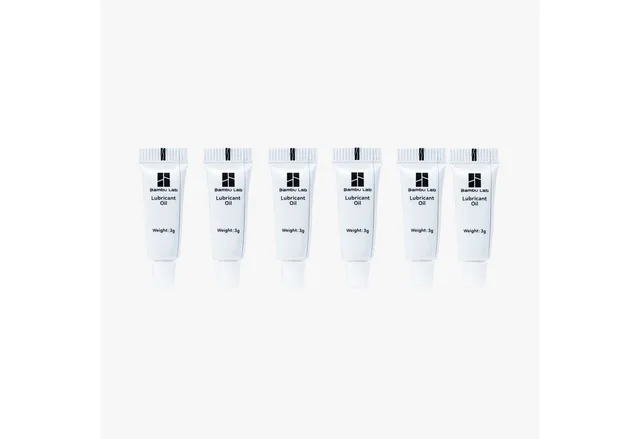
Bambu Lab 3D-Drucker Bambu Lab Schmiermittel für Wartung 3D-Drucker, Hochwertiges Schmieröl für eine reibungsarme und präzise Bewegung.Go to Bol Marketplace
€19.99 · at 1 shop
Popular products at today's lowest price. Compare every shop on the product page.
Short answer: The A1 mini is the small, open entry model for objects up to 18 cm. The A1 is the same kind of printer with a larger build volume. The P1S and P2S are enclosed printers with about the same build volume as the A1, which makes them the choice if you also want to print ABS or ASA. If you want more colours, choose a Combo: the printer together with an AMS.
Bambu Lab makes a whole range of 3D printers with names that look alike. In this guide we put the A1 mini, the A1, the P1S and the P2S side by side, with the versions in our 3D printers. Bambu Lab also makes the X1 and H2 series; we leave those out here. Nozzla does not test printers itself: the details come from Bambu Lab and the product data.
The range at a glance
| Model | Build volume | Enclosure | Multiple colours |
|---|---|---|---|
| A1 mini | 180 x 180 x 180 mm | open | AMS lite |
| A1 | 256 x 256 x 256 mm | open | AMS lite |
| P1S | 256 x 256 x 250 mm | enclosed | AMS |
| P2S | 256 x 256 x 256 mm | enclosed | AMS |
All four come ready to use, calibrate themselves and work with Bambu Lab's Bambu Studio software and Bambu Handy app. The differences are mainly size, the enclosure and which multi-colour system fits.
A1 mini: small and open
The Bambu Lab A1 mini has a build volume of 180 x 180 x 180 mm. That is enough for figures, parts, holders and small gifts, but not for large objects in one piece. The printer is open: in the A1 series the print bed moves back and forth, and you can see and reach everything easily.
An open printer is meant for PLA, PETG and TPU. For materials that warp, like ABS and ASA, Bambu Lab recommends an enclosed printer. The A1 mini Combo is the same printer with the AMS lite for four colours.
A1: bigger build volume, still open
The A1 works like the A1 mini but has a build volume of 256 x 256 x 256 mm. That fits larger objects, like a helmet, a plant pot or several parts at once. It does take more room on your desk, because the bed moves back and forth. Our range includes the Bambu Lab A1 Combo, with the AMS lite.
The A1 is open too, so the same goes for materials: PLA, PETG and TPU are the natural choice.
The A1 series
- Bambu Lab
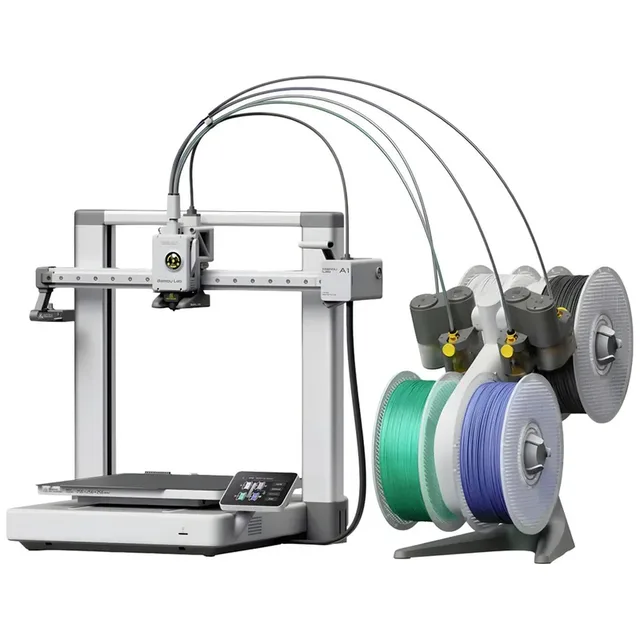
A1 Combo 3d-printer
€563.98 · at 1 shop
P1S: enclosed and for more materials
The Bambu Lab P1S has the same 256 x 256 mm footprint as the A1, with a print height of up to 250 mm according to Bambu Studio, and sits in a closed case with a glass door and a lid. The bed only moves up and down, and the print head moves inside the case. The enclosure keeps the heat around the print, which helps with ABS and ASA. For those materials, put the printer in a ventilated room, because the case does not remove the fumes by itself. Can my printer handle this filament? shows whether an open or closed printer can handle a filament.
With PLA it can get too warm inside. Bambu Lab then advises opening the lid or the door. The P1S works with the AMS, which holds four spools.
P2S: the newer enclosed printer
The P2S is the successor in the same range. Bambu Studio lists a build volume of 256 x 256 x 256 mm, as for the A1. It is enclosed, and our range includes the Bambu Lab P2S Combo with an AMS. The separate AMS 2 Pro has a drying function according to Bambu Lab, so filament in the AMS stays dry or dries again.
Torn between P1S and P2S? In build volume and enclosure they are close, and the P2S is the newer one. So compare what is in the box per version: with or without AMS, and which AMS.
Enclosed printers and the AMS
- Bambu Lab
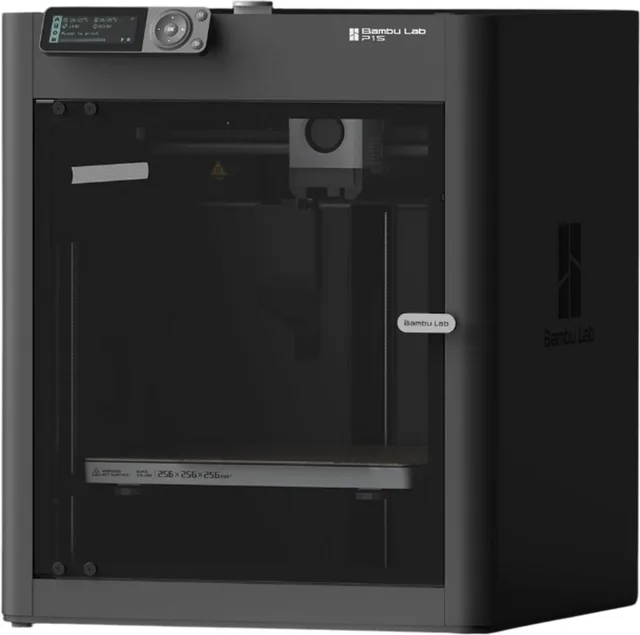
3D-Drucker-Stift P1S
€592.99 · at 1 shop
- Bambu Lab
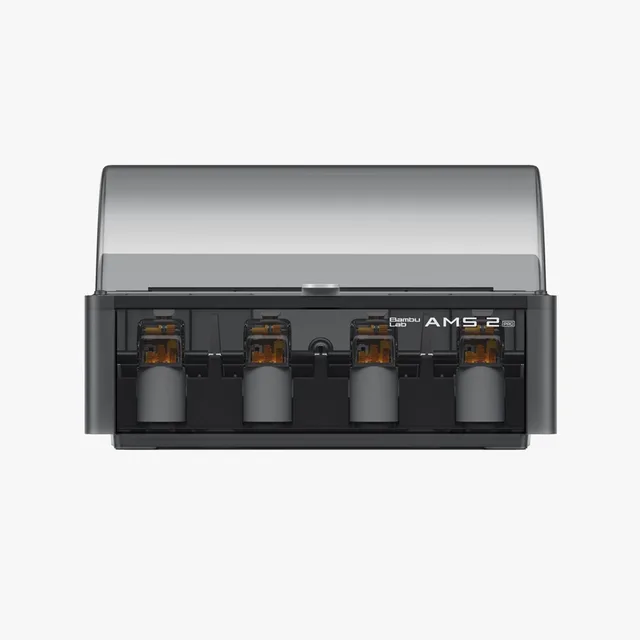
AMS 2 Pro
€419.99 · at 1 shop
Combo or not: multiple colours
A Combo is the printer together with the multi-colour system. The A1 mini and A1 work with the AMS lite, which stands next to the printer. The P1S and P2S work with the AMS, which sits on top of or next to the printer. An AMS switches automatically between four spools. That lets you print in several colours, or have the printer pick up a new spool when the old one runs out.
More colours do cost time and filament: at every change the printer flushes the old colour out of the nozzle. Flexible TPU is usually fed from the separate spool holder rather than through the AMS. Check the manual of your AMS version for what Bambu Lab allows. You can also buy an AMS separately later, so a printer without a Combo is no dead end.
Nozzles and abrasive filament
Filament with carbon or glass fibre needs a hardened steel nozzle, because a regular nozzle wears quickly on it. Bambu Lab sells hardened steel hotends per series, like the 0.4 mm hotend for the A1 series, the one for the P1 series and a hotend for the P2S. Read more about materials in our guide choosing filament.
Frequently asked questions
What is the difference between the A1 and the A1 mini?
Mainly size. The A1 mini prints objects up to 180 mm in each direction, the A1 up to 256 mm. Both are open printers and work with the AMS lite.
Do I need a P1S or is an A1 enough?
If you mostly print PLA and PETG, an A1 is enough. If you want to print ABS or ASA, or want the moving parts behind a door, choose an enclosed printer like the P1S or P2S.
What does Combo mean at Bambu Lab?
A Combo is the printer together with a multi-colour system: the AMS lite with the A1 series, an AMS with the P series. The printer on its own and the Combo are separate products, each with its own EAN.
Can I buy an AMS later?
Yes. You can buy an AMS separately and connect it later. Do check which AMS fits your printer: the AMS lite belongs to the A1 series.
Keep looking
Nozzla doesn’t test machines itself. This guide sets out what manufacturers state.
More buying guides
- Which 3D printer should you choose? FDM or resin, large or compact, open or enclosed, one colour or several: how to choose a 3D printer that fits what you want to make. Read the guide
- Choosing a resin printer and which resin you need For miniatures and fine detail: how to choose a resin printer and the resin that goes with it, and how to work with it safely. Read the guide
- Laser cutter or engraver: how many watts do you need? Diode, CO2 or fiber, and what the number in watts really says: how to choose a laser cutter or engraver, and how to work with it safely. Read the guide